Direct Answer
Outsmarting someone, as Andrew Bustamante explains, isn’t about tricking them — it’s about helping their brain skip unnecessary mental steps so they arrive at a beneficial conclusion with less friction and more lasting trust.
Quick take — what this piece covers
This article summarizes key lessons from Andrew Bustamante’s approach in Outsmart Everyone: why vulnerability opens doors closed by performance, how “radical preference” turns good work into craft, and how tradecraft principles can be used ethically to create net-positive outcomes in relationships and leadership.
New framing: Influence as cognitive service, not coercion
Most influence strategies imagine a winner and a loser. Bustamante reframes influence as a service you provide to another person’s thinking process: if you can reduce their cognitive load and guide them toward a conclusion that serves them, you create durable buy-in instead of short-term compliance.
Core idea in one line
Help a person’s brain skip mental labor toward a decision they already want and benefit from — and you will have true influence that lasts.
Who is Andrew Bustamante?
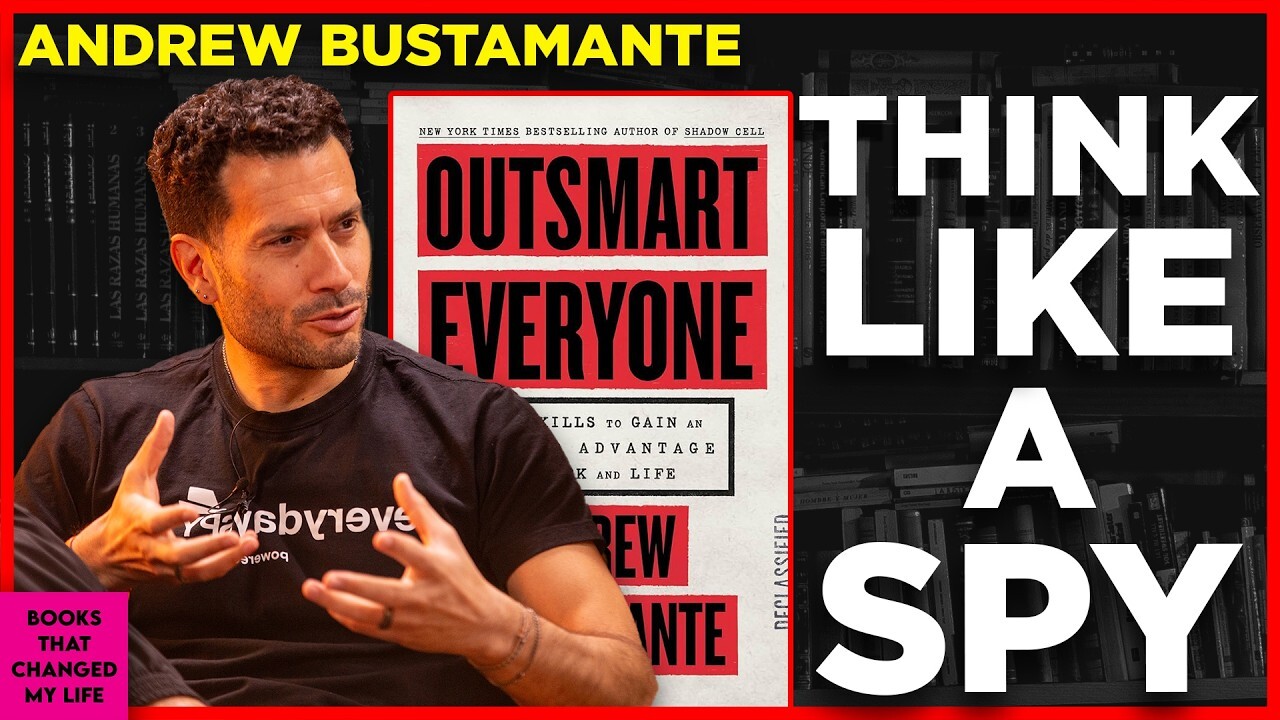
Andrew Bustamante is a former CIA intelligence officer and a US Air Force nuclear missile operator who now speaks, consults, and teaches under EverydaySpy (everydayspy.com). His book Outsmart Everyone translates covert tradecraft into practical frameworks for leaders, entrepreneurs, and individuals trying to improve decision-making and relationships. You can find the book on Target.
What the book and conversation emphasize
- The illusion of outsmarting: True influence is not a triumph of manipulation but the removal of unnecessary thinking so someone reaches a conclusion that benefits them.
- Connection through vulnerability: Performing constant strength creates distance. Real connection happens when people share weaknesses.
- Radical preference and craftsmanship: Deep care for the work — prioritizing effectiveness and conviction over mere efficiency — turns actions into resonant results.
How vulnerability functions as tradecraft
Bustamante argues that projecting unbroken strength builds a defensive barrier — he uses the image of two “turtles trying to cuddle.” The way past those shells is not by matching status or impressing, but by intentionally sharing and acknowledging human burdens so the other person feels safe enough to lower their guard.
He also describes three overlapping spheres most people manage:
- Public life: The persona shown to the world.
- Private life: The close, everyday self where most connection happens.
- Secret life: Deepest fears, motives, and vulnerabilities rarely displayed.
Meaningful influence occurs when you find a way to meet someone at their private level rather than staying on the public surface.
Comparing traditional manipulation and ethical tradecraft
Below are the practical contrasts Bustamante highlights — read them as different intentions and consequences, not just tactics.
- Traditional manipulation
- Core goal: Win at the other person’s expense.
- Cognitive approach: Pressure or force decisions.
- Relational basis: Authority, coercion, or deception.
- Long-term outcome: Often resentment when the tactic is uncovered.
- CIA tradecraft & net-positive influence
- Core goal: Create outcomes where both parties benefit.
- Cognitive approach: Reduce thinking required so the person can reach a desirable conclusion.
- Relational basis: Trust built through shared vulnerability and alignment of goals.
- Long-term outcome: Validation and relief, strengthening future trust.
Radical preference: why it matters for creators and leaders
Radical preference is Bustamante’s term for the insistence that your work reflect what you deeply care about. This is not mere perfectionism; it’s a willingness to put in extra attention where meaning and effectiveness matter most, so your output resonates beyond immediate practical utility.
Practical takeaways you can use
- When trying to persuade, ask: Am I reducing someone’s cognitive load or increasing it?
- To build trust with powerful or guarded people, acknowledge the shared emotional weight they carry rather than trying to out-display competence.
- Apply radical preference in your work: prioritize decisions that align with long-term meaning, not just short-term efficiency.
Want the full conversation?
Watch uncut video conversations on the Books That Changed My Life YouTube Channel: Books That Changed My Life. Listen on Spotify, browse the archive at booksthatchangedmylife.org, or find episodes through the official podcast directory: podcast directory.
Selected quote
“We repel each other with our strengths and connect with each other through our vulnerabilities.” — Andrew Bustamante
Related conversations
Frequently Asked Questions
Q: Does outsmarting someone mean manipulating them for personal gain?
A: Not in Bustamante’s framework. The emphasis is on shaping the environment and information so the other person can reach a decision that aligns with their interests. The ethical aim is mutual benefit, not exploitation.
Q: If both people know tradecraft, do the techniques still help?
A: Yes. Tradecraft works because it leans on basic human cognition and patterns of interaction. When both parties share the framework, conversations move faster and with greater clarity because each person recognizes the effort to reduce friction and build alignment.
Q: How do you break through a leader’s defensive shell?
A: Stop matching public displays of competence. Instead, create a space to acknowledge the common pressures they face — isolation, heavy responsibility, or the need for honest feedback — and let vulnerability become the bridge to a more genuine connection.
Closing thought
Bustamante reframes strategic intelligence as fundamentally human intelligence. The practical skill is less about performing superiority and more about observing, reducing unnecessary mental work, and inviting shared truth through vulnerability. If you want to build durable influence, start by serving the other person’s thinking.
If you’re looking for structured leadership blueprints mentioned in related materials, see the I AM LEADER Book Set.
Related reading on funzalo.com: How The Interestings Shaped Sara Bareilles’ Next Musical; Locus of Control and Agency: Your True Leadership Guide.
Related posts: