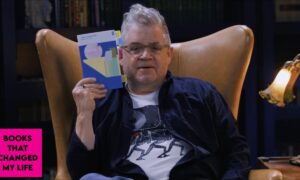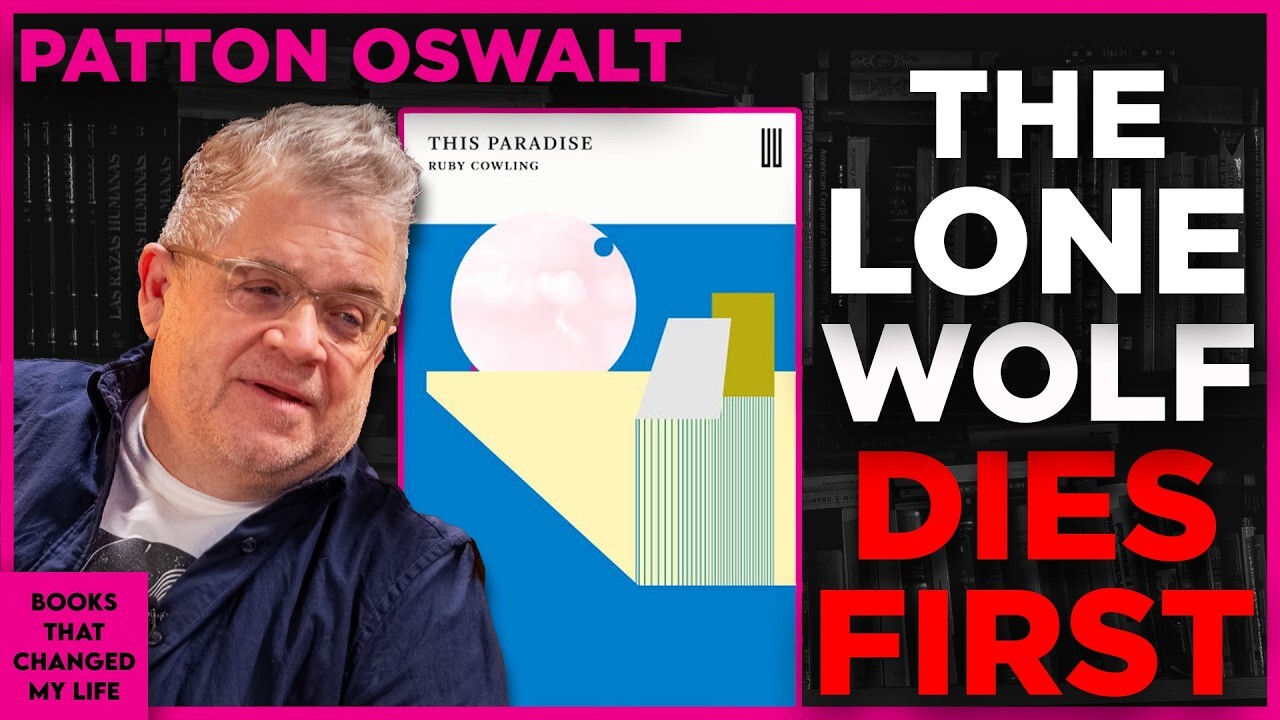
What happens when a seasoned storyteller feels trapped by digital “slop” and predictable algorithms?
For actor and comedian Patton Oswalt, the answer came through an unusual short story collection. Its bold structure broke every familiar rule.
The book combines fragmented text messages, unsettling scenes, and quiet acts of rebellion. As a result, it helped him escape a creative rut.
More importantly, it reminded him that human resilience often appears in ordinary moments. Sometimes, the deepest meaning hides inside everyday life.
Introduction
When Patton Oswalt entered the studio, he brought his sharp and observant perspective. That voice has shaped his work in stand-up comedy and film.
Oswalt is also known for his love of geek culture, literature, and cinema. As a creator, he actively resists intellectual complacency.
However, the digital age began to affect him. Endless scrolling and constant media weakened his attention span. For a time, he also lost his regular reading habit.
Then, he discovered a radically original independent book. The text renewed his focus and reshaped his creative instincts. It also offered a guide for staying human in an increasingly artificial world.
📺 Prefer watching over reading? You can stream the full, uncut video conversation now on the Syndicate X Library YouTube Channel.
About the Book
This Paradise by Ruby Cowing is a groundbreaking contemporary short story collection that fundamentally disrupts traditional literary layouts. Published by Boiler House Press, the text explores a chilling landscape where human connection, choice, and imagination are actively under assault by technology and shifting societal power structures.
Rather than relying on standard prose, Cowing shifts typefaces, fonts, and structures for every piece, explicitly mirroring the fractured way the human brain processes modern information. From mundane encounters in suburban salons to a chaotic race toward a doomsday shelter, This Paradise confronts ancient moral dilemmas through the lens of a terrifyingly recognizable future.
The 10-Year-Old Magical Epiphany and the Vessel Theory
Oswalt’s love affair with the written word began at the age of ten when he tackled Stephen King’s massive apocalyptic novel, The Stand. Prior to that moment, he had viewed thick books merely as a transactional chore designed for school assignments.
Instead, he discovered that a masterful narrative could make 850 pages evaporate in what felt like ten minutes, leaving him yearning for more. For Oswalt, this marked the realization that truly great books do not stop when the final page is turned; they are vibrant excerpts of a deeply felt life where the reader can seamlessly imagine the characters continuing to live out their destinies long after the story ends.
Oswalt’s Evolution of Reading:
[The Stand at Age 10] ──> [Bland Suburban Cargo Culting] ──> [Breaking the Swiping Brain Rot] ──> [Embracing the Mundane]
This early immersion taught him to appreciate writers who allow their characters to break free from rigid authorial outlines. He believes that when an author is genuinely “cooking,” they become a vessel for a living story, occasionally surprised by the sudden, organic choices of their own creations.
Oswalt contrasts this raw, unpredictable magic with the modern trend of over-explained prequels and structured backstory boxes, asserting that the most terrifying and realistic entities in literature—much like Hannibal Lecter in Thomas Harris’s The Silence of the Lambs—simply exist in the present moment without requiring a neatly packaged origin myth.
The Suburban Cargo Cult and Bland Canvas Upbringing
Oswalt’s distinct perspective was forged in a bland bedroom community in Northern Virginia, just outside Washington, D.C. Raised by a mother who worked as a legal secretary and a father who spent twenty years in the Marines before transitioning to building computer systems, Oswalt grew up in an area completely devoid of a distinct regional accent or built-in artistic “scene.”
This absolute lack of a localized culture effectively turned him into a blank canvas, forcing him to rely on happy accidents to discover the wider creative world. He compares his childhood to a “cargo cult,” where profound pieces of art would randomly drop out of the sky and into his lap.
Whether finding a misplaced copy of an intense Harlan Ellison book in his middle school library or receiving an experimental, highly adult Richard Brautigan novel from his mother by mistake, Oswalt spent his youth reverse-engineering the vast outer world from a few scattered, magical objects.
The Cargo Cult Discovery:
[Bland Suburban Environment] ──> [Random Literary Objects Fall in Lap] ──> [Reverse-Engineering a Bigger Creative World]
Curating Intentionality Without an Agenda
Now a father himself, Oswalt is deeply passionate about passing the magic of unforced reading down to his 17-year-old daughter. He views his intentional curation of her literary taste as one of his absolute greatest life accomplishments, having spent her childhood reading books like the entire Harry Potter series out loud to her, before introducing her to sophisticated graphic novels and the psychological terror of Stephen King’s short fiction.
Yet, he strictly balances this guidance by refusing to impose a rigid, overbearing artistic agenda. If a classic film or book fails to land with her, he moves on without judgment, recognizing that true art cannot be forced.
Oswalt’s Intergenerational Exchange (Age 17):
[Father Introduces: Metric, Stephen King, The Odyssey] <───> [Daughter Introduces: Broken Social Scene, Horror Critiques]
This summer, the duo is tackling Homer’s The Odyssey for her school assignment, which Oswalt is artfully pairing with a viewing of the Coen brothers’ O Brother, Where Art Thou? and avant-garde comic books that mash up classical themes with giant monsters.
By showing her how legendary directors like Christopher Nolan shot their micro-budget first films for mere pockets of change, he is actively encouraging her to pick up a camera, embrace her own journal writing, and chase down whatever creative spark lands on her without worrying about permission or prestige.
The Brain Rot Crisis and the Text-Thread Nightmare
The conversation became more urgent when Oswalt described his mental exhaustion. He felt trapped in the addictive cycle of social media.
At the time, he feared that traditional books could no longer hold modern attention. Then, Ruby Cowing’s collection changed his view.
In The Ground Is Considerably Distorted, Cowing presents a massive disaster. However, the page margins contain broken text messages, social updates, and shallow listicle headlines.
This structure mirrors the way people process chaos today. It also shows how digital noise can surround even the most serious events.
Cowing’s Reality Distortion Loop:
[Straightforward Reality Event] ──> [Friend Texts & Pundit Static] ──> [Obfuscated, Fuzzy Truth] ──> [Societal Gossip App]
This jarring format mirrors the chaos of modern life. It shows how digital noise can distort even a simple tragedy.
For Oswalt, the story reveals a deeper problem. Society has turned objective reality into gossip and entertainment.
However, Cowing does not avoid this digital landscape. Instead, she captures it as part of our cultural record.
Her work also offers creators a challenge. Rather than complain about the system, they must respond with greater creativity.
The Somatic Rebellion Against the Technocratic Valley
Oswalt highlighted another short, vicious narrative in the collection titled Eliminate Toxins and Increase Blood Flow. Set during an ordinary afternoon at a nail salon, the story follows an Asian massage therapist dealing with an entitled and inappropriate customer.
Then, without stopping to think, she reacts instinctively. During a back-walking massage, she uses her body weight to eliminate the threat in a quiet act of self-defense.
Oswalt views the story as more than a dark thriller. Instead, he sees it as a metaphor for humanity’s growing struggle against artificial intelligence and an unfeeling billionaire class.
The Uncanny Valley Instinct:
[Encountering Non-Human Artificial Simulation] ──> [Primal Visceral Repulsion] ──> [Somatic Autonomy Defense System]
Just as our bodies possess an evolutionary, visceral repulsion to the “uncanny valley” to protect us from entities that mimic humanity without a soul, Oswalt predicts that our collective body politic is eventually going to stage a mass, subconscious physical revolt to reject the technocrats trying to monetize our lives and erase our agency.
The Illusion of Money in Flamingo Land
The final, climactic story in Cowing’s collection, Flamingo Land, confronts the ultimate illusion of modern status and wealth. As an apocalyptic disaster scenario unfolds, a wealthy family discovers that the driver they hired to ferry their children to an elite survival shelter has no intention of abandoning his own loved ones for a paycheck.
Oswalt noted the profound relevance of this story, citing real-world instances where tech titans and executives construct isolated doomsday bunkers while viewing the working-class people around them as mere functional accessories.
The Survival Equalizer:
[Billionaire Doomsday Shelter Prompts] ──> [Total Real-World System Collapse] ──> [Primal Labor & Survival Skills (Rainwater, Bone-Setting)]
When a true system collapse arrives, the superficial hierarchies of the corporate world vanish instantly. A prompt engineer with high self-esteem but zero practical knowledge of setting a broken bone, collecting clean rainwater, or identifying edible mushrooms will find themselves entirely helpless.
True survival, Oswalt argues, has never belonged to the hyper-isolated “lone wolf alpha” mentality celebrated by modern capital; in nature, a lone wolf is simply an animal waiting to die. The only people who endure are those who form deep, mutual neighborhood roots and remain radically open to other human beings.
For further reflection on how literature shapes identity and personal growth, explore our discussion with Shawn Johnson on The Ruthless Elimination of Hurry.
Key Insights
- The Mundane Is the Source of Epic Art: True artistic genius does not require grand, high-concept space operas. The most profound human tragedies and epics are found inside our daily text threads, messy retail encounters, and the quiet spaces of our routine life.
- True Leadership Belongs to the Relentless: Survival in a chaotic, technological world does not require a path of traditional heroism or loud, performative courage. It requires a quiet, unwavering refusal to let your autonomy be corporate-bulldozed.
- Design Your Work for Fulfillment Over Clicks: Designing art, comedy, or literature to satisfy a digital algorithm results in disposable media slop. True, lasting creation only happens when you let go of posterity, reputation, and cool, focusing solely on the work that makes your own soul vibrate.
Reflection & Call to Action
Patton Oswalt’s brilliant journey through the pages of This Paradise reminds us that remaining human in a technocratic age requires us to actively unplug from the slop and take control of our immediate reality. If you are ready to stop watching from the sidelines and claim your own ultimate authority, take charge of your personal legacy with the exclusive I AM LEADER Presentation Book Set. This limited-edition training system provides the exact structural blueprints needed to defend your autonomy and unlock your maximum leadership potential. For more deep-dive literary conversations, browse our extensive archive on the Books That Changed My Life main blog or listen to the full, uncut audio presentation on our official podcast episode page.
About the Guest
Patton Oswalt is an Emmy and Grammy Award-winning actor, comedian, and New York Times bestselling author. Celebrated for his iconic roles in Ratatouille, The King of Queens, and countless critically acclaimed comedy specials, he continues to push the boundaries of modern stand-up with his latest release, Tea and Scotch. A passionate advocate for independent publishing and micro-budget filmmaking, Oswalt currently resides in Los Angeles, where he is preparing for his upcoming directorial feature debut.
FAQ Section
Q: Where did Patton Oswalt first discover the writing of Ruby Cowing? A: Oswalt first encountered Cowing through a short story titled Odmund Till, which was included in a literary short story advent calendar published by the Canadian independent press Hingston & Olson. The piece was so deeply touching and original that he immediately bought ten copies of her collected work, This Paradise, to mail to his closest creative friends.
Q: Why does Oswalt refuse to use artificial intelligence tools in his own creative process? A: Oswalt believes that the current corporate wave of generative AI is driven by individuals who secretly resent raw human creativity and want to eliminate the joyful, unpredictable process of making art from a blank canvas. While he supports using AI for diagnosing diseases or sorting complex cosmic data, he protects the human element of comedy and writing at all costs.
Q: What is Patton Oswalt’s preferred midday drink when relaxing in the studio? A: Oswalt loves the taste of coffee, but because it doesn’t love his stomach back, he relies on a specific cup of tea to get a midday jolt. He uses two bags of British PG Tips tea mixed with a small dollop of honey, jokingly remarking that the strong brew makes him feel like a cynical old British spy who has completely given up on the world.
: What cinematic project is Patton Oswalt working on next with his brother? A: Inspired by the micro-budget philosophies of directors like Christopher Nolan and Richard Linklater, Oswalt is currently preparing to direct a low-stakes crime movie script written by his younger brother. The feature is designed to be shot incredibly tight and cheap for under $2 million dollars, using only two primary filming locations.
Final Thoughts
Reclaiming our mind from the age of digital distraction requires a radical shift in perspective. For Patton Oswalt, finding his voice didn’t mean hiding away in an isolated mountain cabin; it meant learning to see the timeless human epics unfolding inside our everyday texts, simple neighborhood bonds, and quiet morning rituals. By surrendering our obsession with status, clicks, and viral reputation, we finally clear the space to build an authentic body of work that doesn’t just fill an archive, but keeps the raw flame of our shared humanity burning bright.

Related posts: