Direct Answer
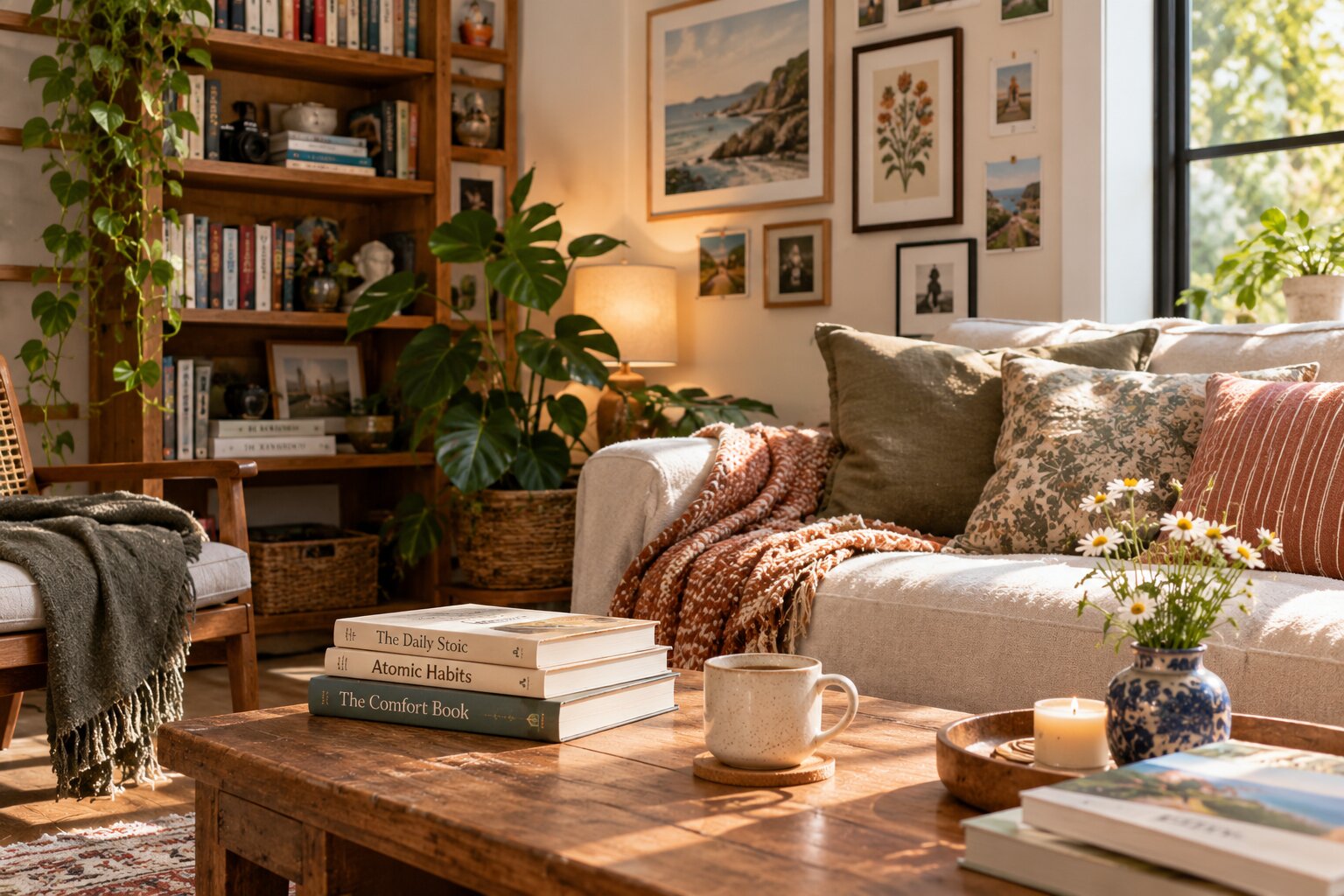
Comfortable lived-in spaces do not have to follow the rules of a showroom. Some rooms feel more welcoming when they contain favorite books, artwork collected over time, family photographs, and furniture that has been used for years. These details give a home character because they reflect the people who live there.
That doesn’t mean every possession needs a place on display. The most successful lived-in spaces make room for personal belongings while keeping everyday areas practical. Instead of choosing between an empty-looking interior and a crowded one, homeowners can create a balance that supports both comfort and daily routines.

Give Your Belongings a Place, Not Every Surface
One way to make lived-in spaces feel personal is to decide which belongings deserve to be visible and which are better stored nearby. A favorite book might stay beside the bed, while older titles can go on a shelf. A handmade ceramic piece might sit on a console, while other decorative objects take turns being displayed.
This approach gives meaningful possessions a place without allowing them to occupy every available surface. It also makes cleaning and reorganizing less demanding.
Try looking at each room and identifying the objects you use regularly, the ones that carry personal meaning, and those you simply no longer need. Keep the first two groups accessible, then consider storing, donating, or letting go of items that no longer serve a purpose.
Build Character Through Objects You Actually Enjoy
A home can feel more distinctive without following one decorating style. A secondhand painting, an old family photograph, a postcard, or an unusual frame can contribute more personality than a collection of matching accessories chosen only to complete a look.
The same applies to books. Rather than arranging every title according to color, keep the books you enjoy reading within reach. A small stack beside the sofa or a basket near a favorite chair can make reading part of the room’s everyday atmosphere.
Artwork can also change as your interests develop. You might begin with one print and gradually add photographs, illustrations, or pieces found at flea markets and antique stores. The result does not need identical frames or perfectly measured spacing. A sense of balance is often enough.
These personal details are part of what makes lived-in spaces different from interiors designed primarily for photographs. They show how a home has developed over time.
Use Texture to Make a Room Feel Comfortable
Personality does not have to come from adding more decorations. Materials and textures can make a room feel warmer without filling it with objects.
Consider combining a linen curtain with a knitted throw, a woven basket, a wooden side table, or a ceramic vase. Natural materials can work together even when their colors and finishes are not identical.
You can also move useful items between rooms instead of buying something new. A basket that once held blankets might organize reading materials, while a small table from another area could serve as a bedside surface.
The aim is to make the room pleasant to use. Lived-in spaces can be tidy and thoughtfully arranged without requiring every piece of furniture or accessory to match.
Set Practical Limits Before Clutter Builds Up
Personal collections can grow gradually. Books accumulate, photographs get added to walls, and small objects find their way onto shelves and tables. Without a little organization, the things that make a room meaningful can eventually make it difficult to use.
A simple display limit can help. Decide how much space a particular surface should give to decorative or personal objects. For example, a coffee table might hold a few books, a tray, and one meaningful item, while a bedside table keeps room for a lamp, current reading material, and daily essentials.
When you acquire something new, consider rotating an existing display rather than adding another layer. Store seasonal decorations and less frequently used possessions in labeled boxes or baskets. You can bring them back when you want a change.
This doesn’t mean every shelf needs a strict numerical limit. The useful question is whether the objects are still easy to reach, clean, and enjoy. If a collection makes an area difficult to maintain, it may be time to edit the display.
Arrange Rooms Around the Activities That Happen There
The appearance of a room matters, but its everyday purpose should guide its layout. A home office, for instance, needs suitable lighting, a comfortable chair, and enough room for notes or equipment. A reading corner benefits from a supportive seat, a lamp, and somewhere to place a drink or book.
Even a small home can support different activities. If separate work and rest areas are not possible, a dedicated shelf or basket can keep work supplies together and make them easier to put away when the day ends.
Research published in the Journal of Environmental Psychology has examined the relationship between home clutter and psychological well-being, including the role that perceived beauty may play. This does not suggest that every home must remain spotless. Rather, it offers a reason to consider how the appearance and usability of a space affect the people living in it.
IKEA’s Life at Home research also explores how comfort, identity, and belonging contribute to people’s experiences of home. The value of an interior is not limited to how it looks; how it supports everyday life matters too. You can explore IKEA’s Life at Home research.
Let Your Home Change Along With Your Life
A room does not have to remain arranged the same way forever. A reading corner might become a workspace when circumstances change. A bookshelf might gradually fill with new interests, while artwork collected during different stages of life finds a place on the walls.
This flexibility is one of the strengths of lived-in spaces. They can reflect changing routines instead of requiring residents to maintain a fixed decorative identity.
It also helps to leave some open areas. An empty section of a shelf or a clear part of a table gives you room to use the space differently later. Personal interiors do not need to display every meaningful possession at once.
A home that feels comfortable can also make it easier to slow down and enjoy the things you love, whether that’s reading about soft ambition or simply taking a quiet break at the end of the day.
Frequently Asked Questions
What makes a home feel lived-in?
A lived-in home reflects the habits, interests, and experiences of its residents. Books, collected artwork, family photographs, comfortable furniture, and familiar everyday objects can all contribute. The style is personal, but it does not have to be messy.
How can I display personal items without creating clutter?
Choose a few objects for each surface and leave enough room to use it comfortably. Store other belongings nearby and rotate displays when you want a different look. This allows meaningful possessions to remain visible without overcrowding the room.
Do bookshelves need to look perfectly organized?
No. Books can be arranged vertically or horizontally, with photographs and small objects included where there is room. The important thing is to keep the shelves accessible and avoid filling every gap simply because it is available.
Can different furniture styles work together?
Yes. A room can combine vintage furniture, newer pieces, secondhand finds, and items with personal meaning. Repeating a material, color, or texture can help the different elements feel connected without making everything match.
Can home decor influence how a room feels?
Surroundings can affect comfort and distraction, although people respond to different environments in different ways. Some prefer clear surfaces, while others enjoy having books, artwork, and collections nearby. Pay attention to what helps you relax and use the room comfortably.
Final Thoughts
A home does not need to look untouched to feel beautiful. The books you return to, the artwork you found at a market, and the chair that has become your favorite place to sit can all contribute to a space that feels genuinely yours.
The key is deciding what to display, what to store, and how each room should support your routine. With a little editing and thoughtful organization, lived-in spaces can feel personal without becoming overwhelming.
Further Reading for the Soul
- Why Do Women Crave Comfort Fiction?
- How The Seat of the Soul Influenced Tiffani Thiessen
- Related reading on funzalo.com: wall panels that combine function and visual texture; ways practical home features can support everyday living.

Related posts: